
 Save to Pinterest
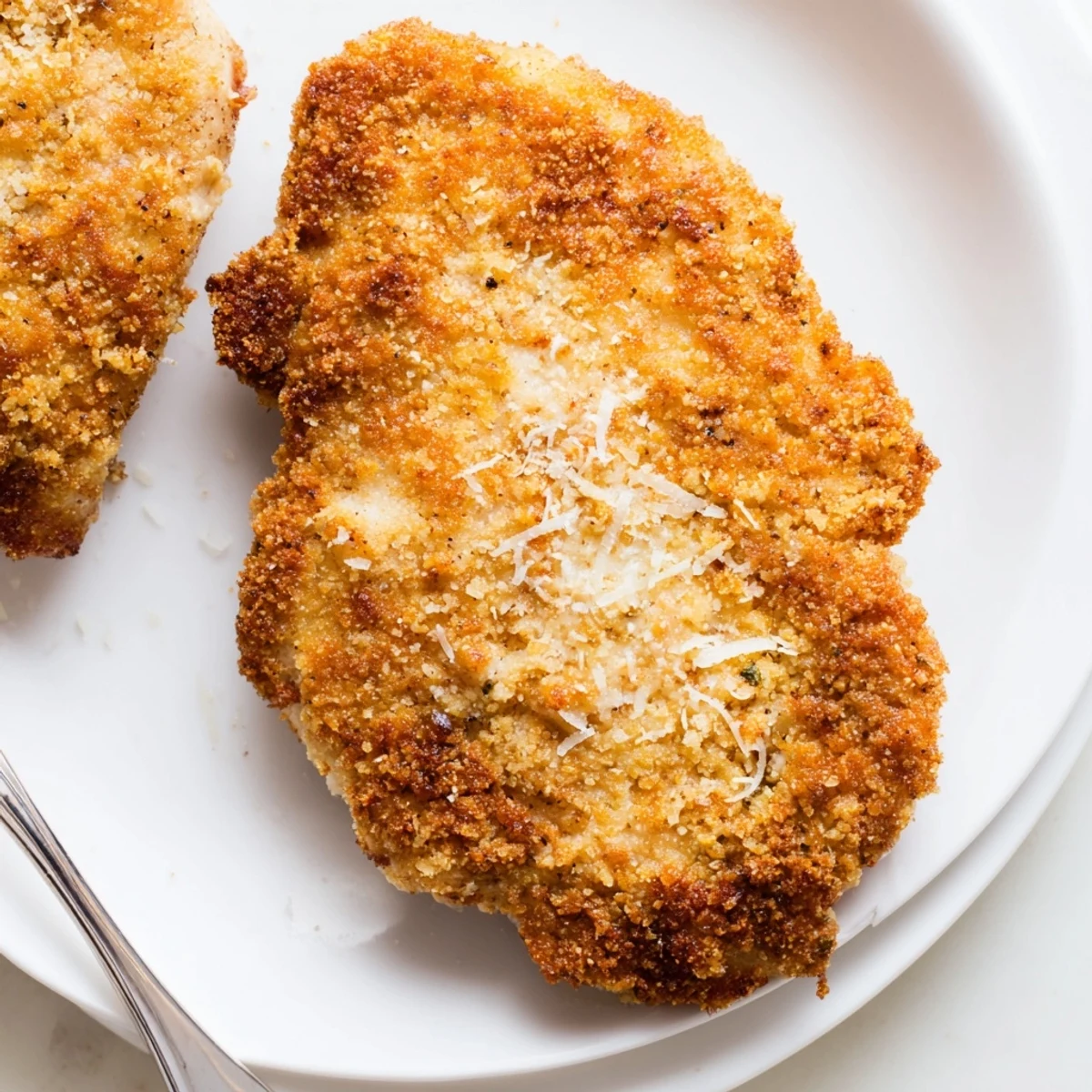
 Marinate chicken fillets in buttermilk with garlic and onion powders for at least 15 minutes to tenderize. Double-dredge in a mixture of flour, panko and grated Parmesan, then shallow-fry in oil heated to 350°F until golden and cooked through. Toss shredded romaine with Caesar dressing and shaved Parmesan, toast brioche with butter, and assemble while the chicken is hot. For a lighter option, bake at 400°F for 20–25 minutes. Serve with extra dressing or lemon wedges.
Lately, whenever I fry chicken, the whole kitchen fills with that tempting sizzle and aroma that makes everyone wander in to ask what’s coming. I found myself craving something crunchy yet fresh, and this sandwich scratches both itches perfectly. Handling Caesar dressing while balancing piping-hot chicken can get laughably messy, but that’s part of the fun. Honestly, the first time I made this, I couldn’t resist sneaking a bite before the buns were even assembled.
I brought these to a casual gathering, assuming folks would grab pizza instead, but the stack of sandwiches vanished first. My neighbor declared them the best upgrade to a chicken sandwich he’d ever tasted, while we all debated the perfect amount of Parmesan and Caesar to pile on top.
Ingredients
- Chicken breasts: Slicing them in half makes them cook faster and more evenly for that perfect crunch in every bite.
- Buttermilk: Its tang and tenderizing magic ensure juicy chicken (if you’re out, a mix of milk and lemon juice works in a pinch).
- Garlic powder & onion powder: Both pack in deep flavor right in the marinade, which is easier than juggling raw garlic.
- Salt & black pepper: It’s worth seasoning the marinade generously so the chicken doesn’t taste bland.
- Flour: Essential for helping the crispy coating stick and brown beautifully.
- Panko breadcrumbs: Their extra-large flakes turn shatteringly crunchy—patted gently on so they really cling.
- Grated Parmesan cheese: Parmesan in the coating adds savory depth and a touch of saltiness—don’t skip if you love Caesar flavor.
- Eggs: Whisked eggs are the “glue” for that double dredge I swear by.
- Vegetable oil: I use canola or sunflower for toasting, but any neutral oil will work for frying.
- Romaine lettuce: Shredded small, it won’t tumble out everywhere and keeps things crisp.
- Caesar dressing: I sometimes use store-bought in a rush, but a thick, garlicky one is best.
- Shaved Parmesan cheese: The larger shavings actually melt just a little over the warm chicken, which is dreamy.
- Brioche or sandwich buns: Soft but sturdy enough to hold everything—brioche makes them feel extra special.
- Unsalted butter (optional): Toasting the buns with butter makes the edges irresistible and helps them stay crisp.
Instructions
- Soak the chicken:
- Add your sliced fillets to the buttermilk marinade, turning to coat, and let them chill—meanwhile, you’ll gather the other components.
- Mix the coating:
- Combine flour, panko, and Parmesan in a wide dish so you can press in the chicken later; it’ll look a bit lumpy, which is right.
- Dredge for extra crunch:
- Drag each piece through the flour-panko, then egg, then again through the mix, really pressing crumbs on before frying.
- Get frying:
- Heat half an inch of oil until shimmery (around 350F); fry chicken in batches, listening for that happy crackle, until deeply golden, then drain on paper towels.
- Toss Caesar salad:
- In a cold bowl, toss romaine with Caesar dressing, fold in shaved Parmesan, and taste for salt—this part comes together quickly.
- Toast buns (optional):
- Rub butter on cut sides and toast facedown in a dry pan until golden (your kitchen will smell fabulous at this point).
- Build the sandwiches:
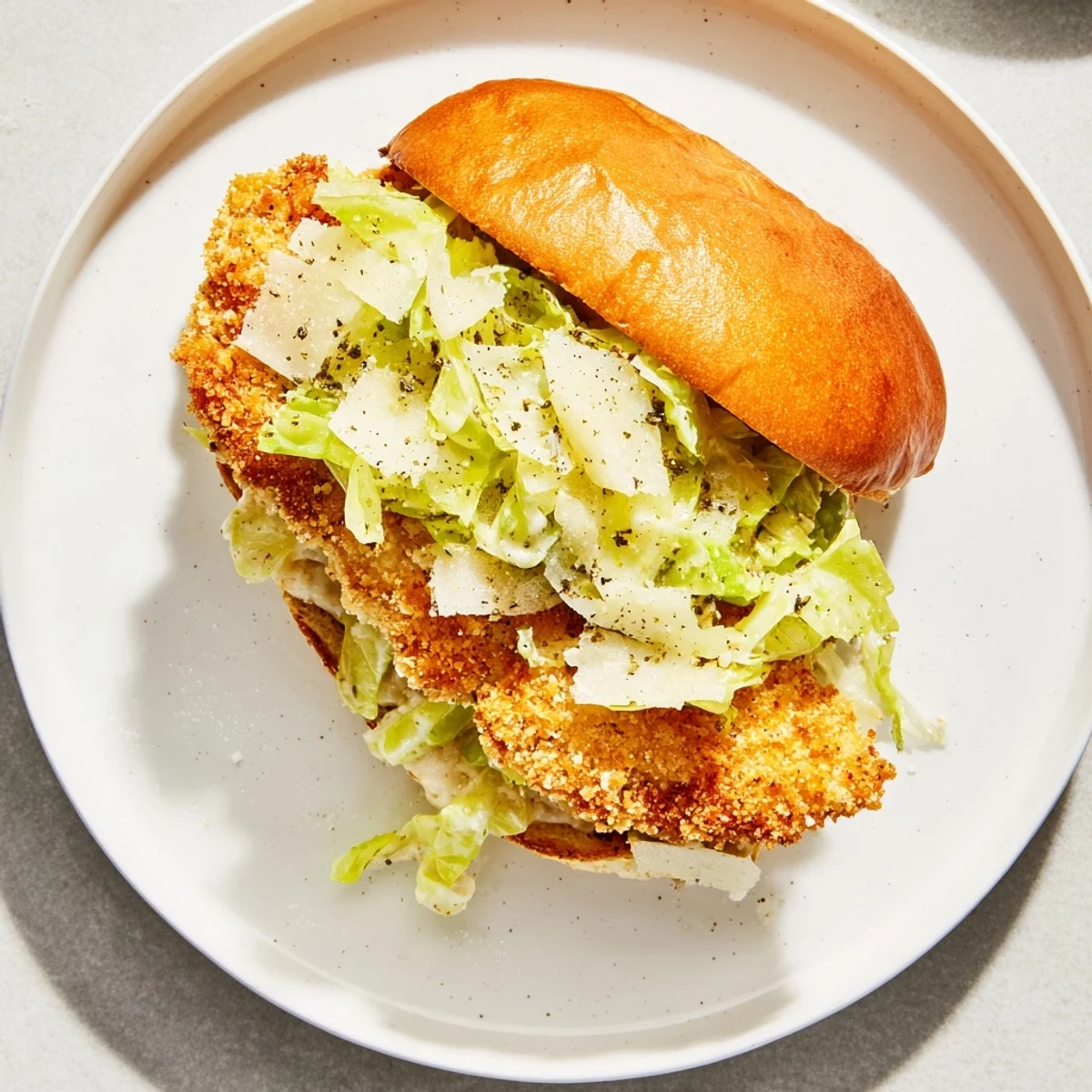
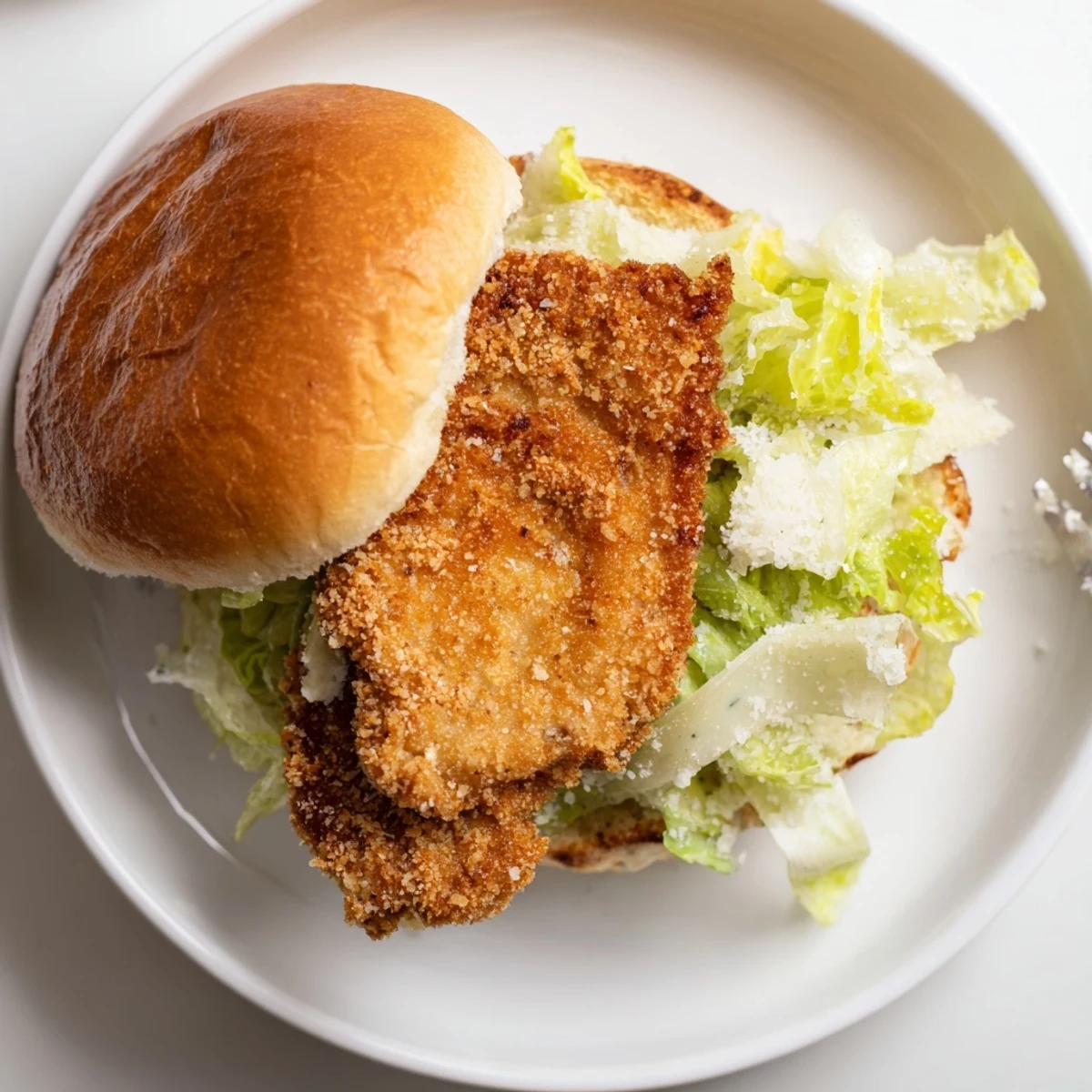
- Layer crispy chicken onto the bottom buns, heap on Caesar salad, and crown with the toasty tops—serve immediately so nothing wilts.
 Save to Pinterest
 One evening, the bite of black pepper and lemony dressing turned a dreary weekday into a little celebration at the dinner table. There’s something about everyone crunching together, laughing at rogue lettuce leaves, that turns this sandwich into a moment as much as a meal.
How I Keep Lunch Interesting
After discovering this recipe, I started prepping the chicken in advance for fuss-free lunches. There’s no denying the appeal of a homemade sandwich that tastes like café fare, especially when you’re working from home and want a pick-me-up.
What Happens If You Bake Instead
Baking works in a pinch, especially if you want to lighten things up, but the skin won’t shatter quite the same way. Still, with a hot oven and a sturdy wire rack, you’ll get satisfying crunch, and adding a few spritzes of oil over the coating helps a lot too.
Last Little Caesar Secrets Before You Start
One trick I swear by is to toss the salad right before assembling so it stays cool and doesn’t make the buns soggy. Making your own Caesar dressing only takes a couple more minutes, and the results are so much zestier. If you love smoky flavor, a pinch of smoked paprika in the flour is a subtle upgrade.
- Have all components ready before you start frying—the process goes fast.
- Let chicken rest a couple minutes after frying to set that crust.
- Keep a few extra napkins handy; it’s gloriously messy.
 Save to Pinterest
 If you get the chance, make this for someone you like—sharing a crispy chicken Caesar sandwich is a shortcut to brightening anyone’s day. Next time, I might add a little squeeze of lemon right before serving for the perfect hit of tang.
Recipe Questions & Answers
- → How long should I marinate the chicken?
-
At least 15 minutes will tenderize and add flavor; 1–4 hours in the fridge deepens tenderness without breaking down the meat too much. Avoid overnight for very thin fillets to prevent mushy texture.
- → What oil is best for frying?
-
Use a neutral, high-smoke-point oil such as vegetable, canola or peanut oil. Maintain around 350°F so the coating browns quickly without absorbing excess oil.
- → How can I keep the coating extra crispy?
-
Double-dredge (flour, egg, flour) and include panko for texture. Drain fried pieces on a wire rack rather than paper towels, assemble sandwiches just before serving, and avoid overdressing the salad to prevent sogginess.
- → How do I confirm the chicken is cooked through?
-
Check for an internal temperature of 165°F at the thickest part, or slice open a piece to ensure juices run clear and there’s no pink near the bone. Thin fillets typically need 3–4 minutes per side at 350°F.
- → Can I bake the chicken instead of frying?
-
Yes. Place coated fillets on a wire rack over a baking sheet, bake at 400°F for 20–25 minutes, flipping once. Finish under the broiler for extra color if needed.
- → Any good substitutions for buttermilk or Parmesan?
-
For a buttermilk substitute, add 1 tablespoon lemon juice or vinegar to 1 cup milk and let sit 5 minutes. Swap Parmesan with Pecorino Romano for a sharper bite, and keep panko for the crispiest crust.