
 Save to Pinterest
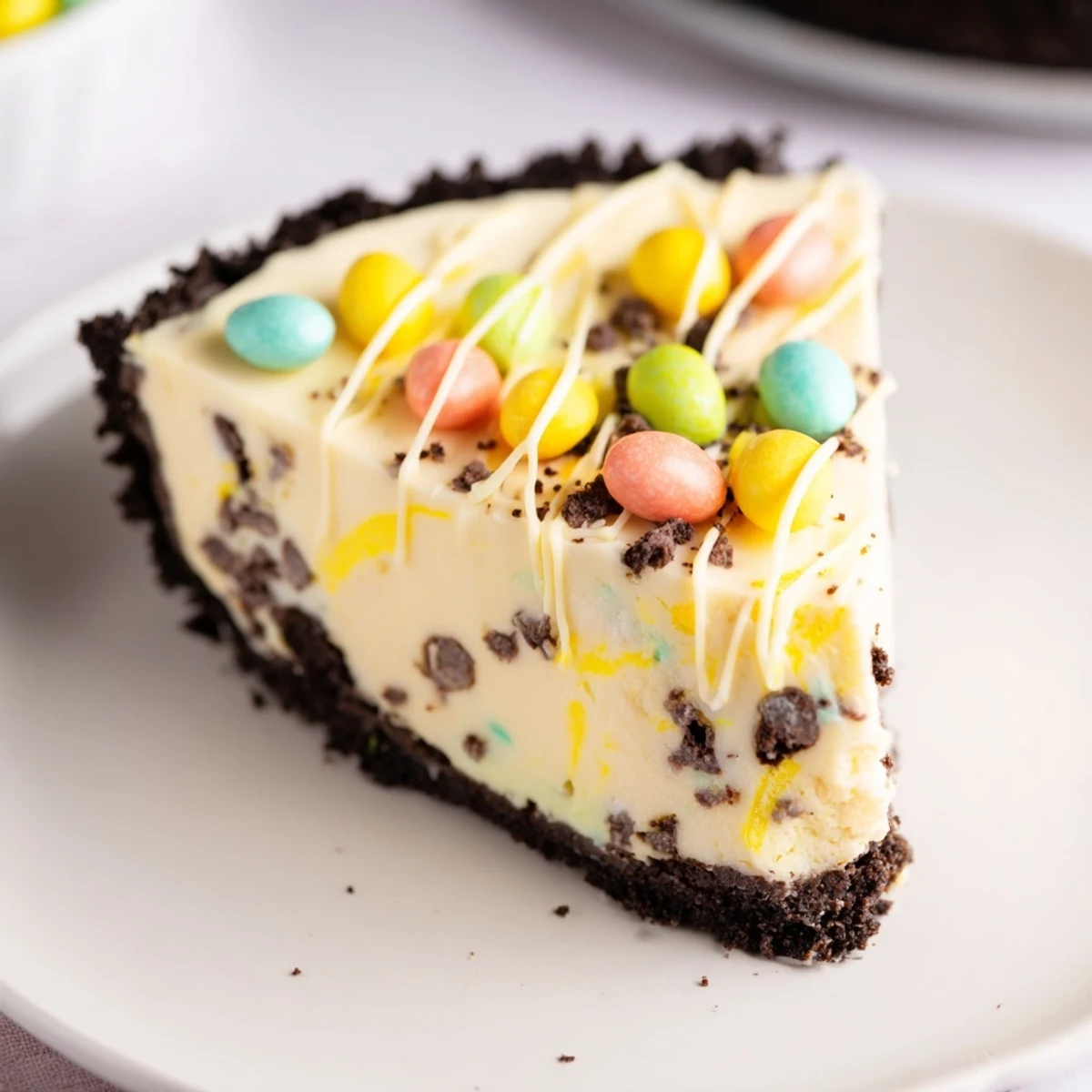
 This indulgent dessert features a crunchy chocolate sandwich cookie base topped with an incredibly smooth, tangy cream cheese filling enriched with sour cream and bright lemon zest. After slow-baking to perfect silkiness, the cheesecake requires proper chilling to set completely before crowning with festive mini chocolate eggs. The result is a stunning centerpiece that balances rich chocolate notes with refreshing citrus, making it ideal for holiday entertaining.
Last spring, my kitchen counter became an explosion of pastel wrappers when my niece decided we needed a showstopper dessert for Easter brunch. We spent the morning crushing chocolate sandwich cookies with way too much enthusiasm, laughing as butter flecks dotted our aprons. That cheesecake emerged from the oven with the perfect gentle wobble, and the way her face lit up when she arranged those tiny chocolate eggs on top like edible jewels made every minute worth it. Now it's the one request I get before the first daffodil even bloom.
I learned the hard way that room temperature ingredients are nonnegotiable after attempting this with cold cream cheese once. Tiny lumps haunted my otherwise smooth batter, and my husband pretended not to notice while picking through his serving. Now I set everything out on the counter before I even grab the mixing bowl, turning my kitchen into a patient waiting game that pays off in silky perfection.
Ingredients
- 200 g chocolate sandwich cookies: Oreos work beautifully here, and I've found that crushing them with the bottom of a heavy glass satisfies some primal kitchen urge
- 75 g unsalted butter, melted: Salted butter works too, just reduce any added salt in the filling if your cookies are already on the salty side
- 600 g fullfat cream cheese: Please use the block kind, not tub spread—your future self deserves that velvety texture
- 150 g granulated sugar: This amount hits that sweet spot where it's not cloying but still feels like a proper dessert
- 2 tbsp cornstarch: The secret weapon that keeps your cheesecake from cracking, learned after one too many shattered disappointments
- 200 ml sour cream: Full fat adds this incredible tang that cuts through all that richness perfectly
- 3 large eggs: Adding them one at a time prevents overworking the batter, which leads to that dreaded sinking center
- 1 tsp pure vanilla extract: Splurge on the good stuff here since it's one of the star flavors shining through
- Zest of 1 lemon: I zest right over the bowl to catch all those aromatic oils that would otherwise escape onto my cutting board
- 100 g mini chocolate Easter eggs: Mix pastels with speckled ones for that artful look that makes people think you tried harder than you actually did
- 50 g white chocolate, melted: The drizzle is completely optional but makes everything feel ten times more fancy
Instructions
- Prep your pan and oven:
- Preheat oven to 160°C (320°F) and line the base of a 23 cm springform pan with parchment paper. I learned to use a springform after spending twenty minutes chipping a cheesecake out of a regular pan one Easter morning.
- Build the chocolate crust:
- Mix crushed cookies with melted butter until it looks like wet sand, then press firmly into your prepared pan. Chill it in the fridge while you make the filling—this little step keeps the crust crisp and prevents it from getting soggy later.
- Beat the cream cheese base:
- In a large bowl, beat cream cheese and sugar until completely smooth. This takes longer than you think, and I usually scrape down the bowl three times to make sure no lumps are hiding.
- Add the filling ingredients:
- Blend in cornstarch first, then sour cream, eggs one at a time, vanilla extract, and lemon zest. Mix until just combined—overbeating introduces too much air, which causes the cheesecake to puff and then collapse dramatically.
- Assemble and bake:
- Pour filling over your chilled crust and smooth the top with a spatula. Bake for 50–60 minutes until edges are set but the center still has that gentle wobble like soft pudding when you give the pan a little nudge.
- The cooling trick:
- Turn off the oven, crack the door open with a wooden spoon, and let the cheesecake cool inside for 1 hour. This gradual cooling prevents the sudden temperature shock that causes cracks.
- Chill thoroughly:
- Remove from oven and cool completely at room temperature, then cover and refrigerate for at least 4 hours or overnight. The flavors deepen overnight, so making it a day ahead is actually doing yourself a favor.
- Decorate before serving:
- Arrange mini chocolate Easter eggs on top and drizzle with melted white chocolate if you're feeling fancy. Unlock the springform ring gently and slice with a sharp knife dipped in hot water for those picture perfect servings.
 Save to Pinterest
 My sisterinlaw still talks about the Easter I forgot to chill the crust and ended up with chocolate cookie mush at the bottom of an otherwise perfect cheesecake. We ate it in bowls and called it deconstructed, but I've never skipped that chilling step again. Now I set a timer and everything turns out exactly as it should.
Mastering The Crust
Pressing the crust into the pan with the bottom of a measuring cup gives you that beautifully even layer that holds up perfectly to slicing. I used to use my fingers until I realized I was always compounding the crust thicker in some spots than others, leading to those frustratingly crumbly pieces that fall apart on the plate.
The Cooling Game
That oven door trick is absolute magic for preventing cracks, which I discovered after years of webtopped cheesecakes that I tried to hide under strategic garnish placement. The slow cooling lets the structure set gently, and my patience has rewarded me with smooth, crackfree tops that look like they came from a bakery window.
Decoration That Wows
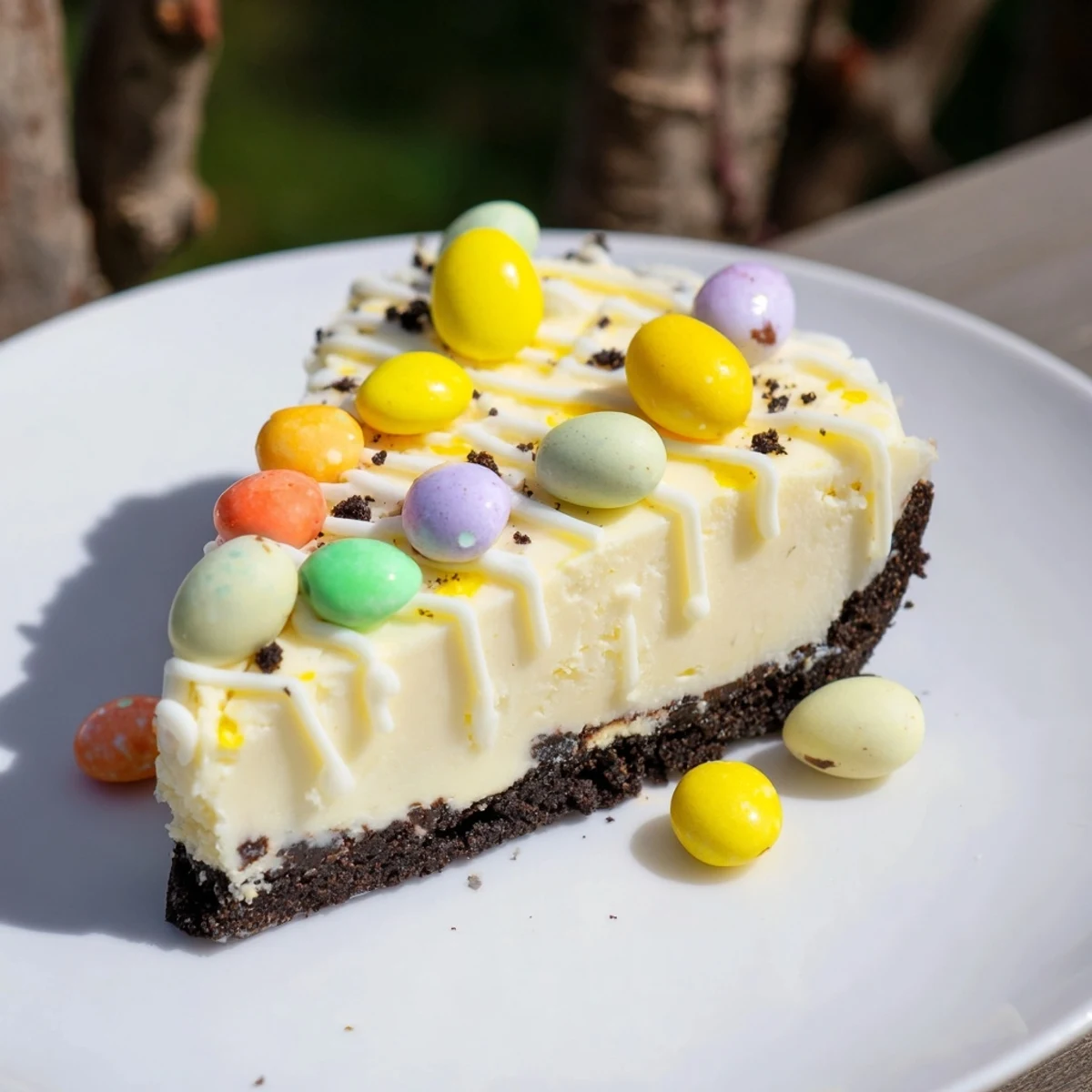
Press the mini chocolate eggs into the cheesecake just gently enough that they stay put but don't sink into the creamy surface. I arrange them in concentric circles or random clusters, depending on my patience level that day, and always keep a few extra handy for the ones that mysteriously disappear during the decorating process.
- Mix different sized eggs for visual interest
- Let the white chocolate cool slightly before drizzling so it doesn't melt the candy coating
- Add any decorations right before serving to keep colors vibrant
 Save to Pinterest
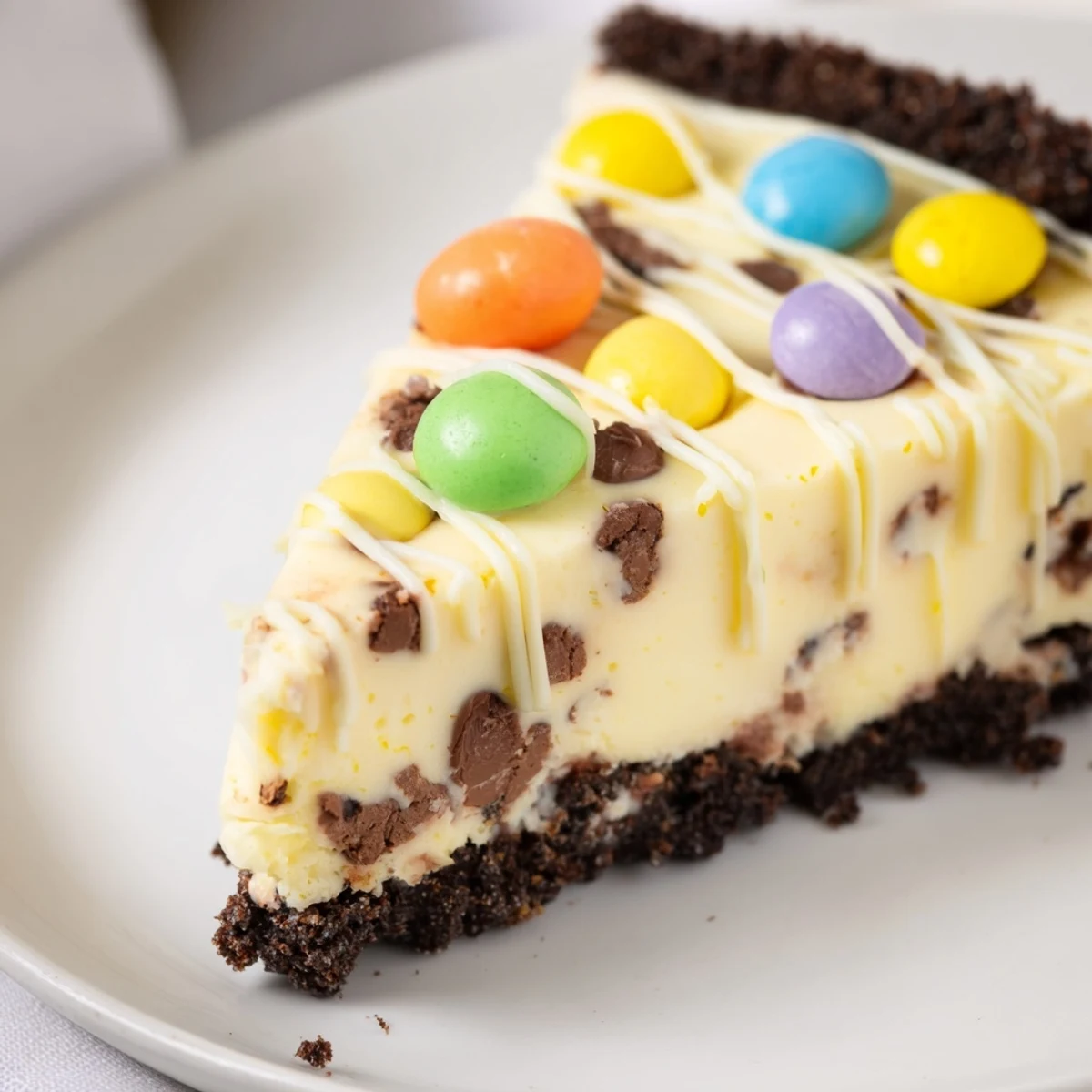
 There's something deeply satisfying about sliding that springform ring away and revealing a perfect cheesecake topped with all those cheerful pastel eggs. It's become more than dessert—it's the moment my family knows spring has officially arrived at our table.
Recipe Questions & Answers
- → Can I make this cheesecake ahead of time?
-
Yes, this cheesecake actually improves when made in advance. You can prepare it up to 2 days before serving and store it covered in the refrigerator. The flavors develop beautifully during this time, and the texture becomes even creamier.
- → Why does my cheesecake crack?
-
Cracks usually occur from overbaking or cooling too quickly. To prevent this, avoid opening the oven door during baking, and follow the technique of cooling the cheesecake gradually in the oven with the door cracked open before removing it completely.
- → Can I use regular chocolate eggs instead of mini ones?
-
While mini chocolate eggs work best for even distribution and easy serving, you can certainly use larger eggs. Simply arrange them decoratively on top or cut larger eggs into pieces to scatter across the surface.
- → What's the purpose of cornstarch in this filling?
-
Cornstarch acts as a stabilizer that helps prevent cracking and gives the cheesecake a slightly firmer, more structured texture while maintaining its creamy consistency. It's particularly helpful for cheesecakes that will be decorated.
- → Can I freeze this cheesecake?
-
Yes, you can freeze this cheesecake for up to 3 months. Wrap it tightly in plastic wrap and aluminum foil after it has fully chilled. Thaw overnight in the refrigerator before adding the decorative eggs, as they may become sticky when frozen.
- → Why is lemon zest included in the filling?
-
Lemon zest provides a bright, fresh contrast that cuts through the richness of the cream cheese and chocolate crust. This subtle citrus note balances the sweetness and prevents the dessert from feeling overly heavy.