
 Save to Pinterest
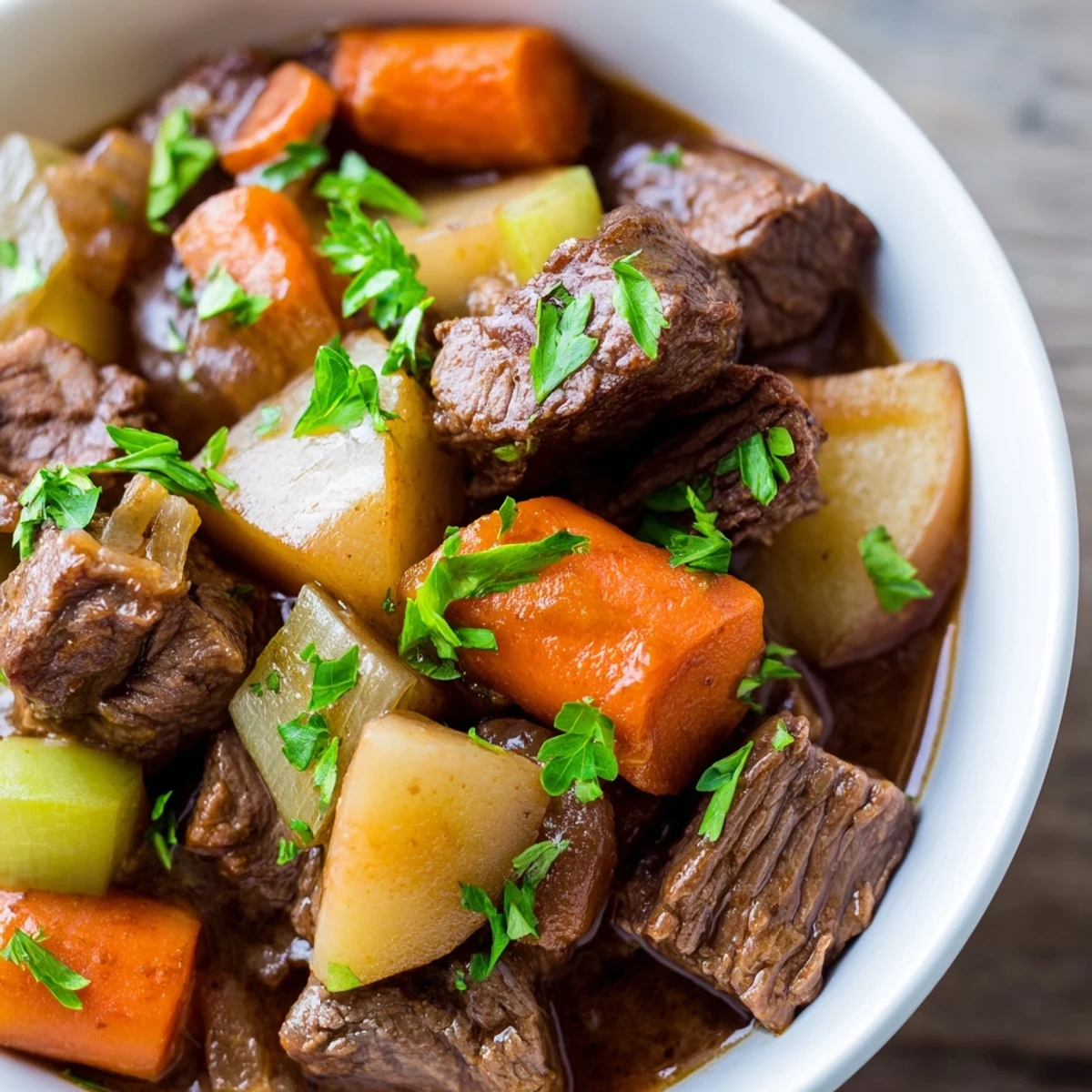
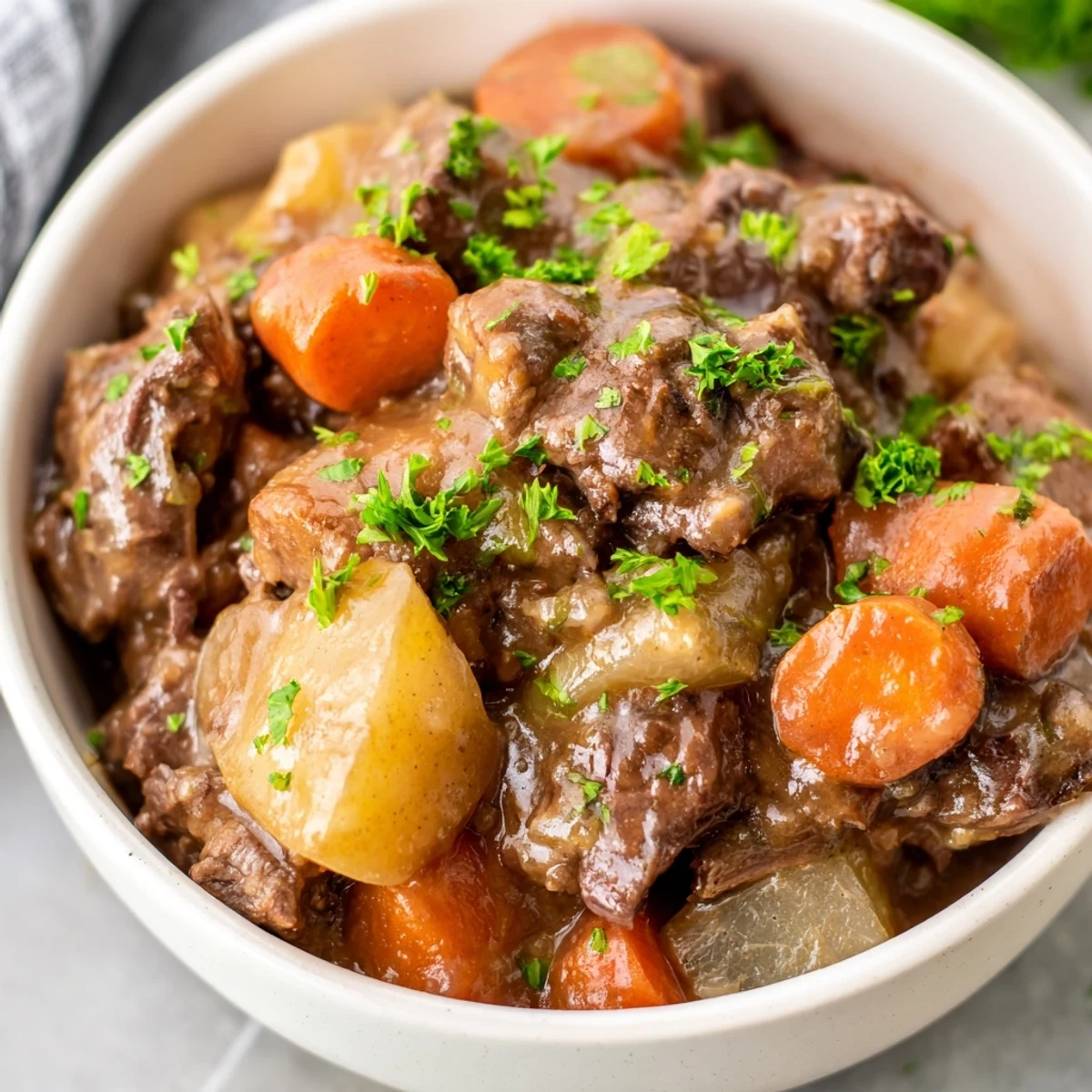
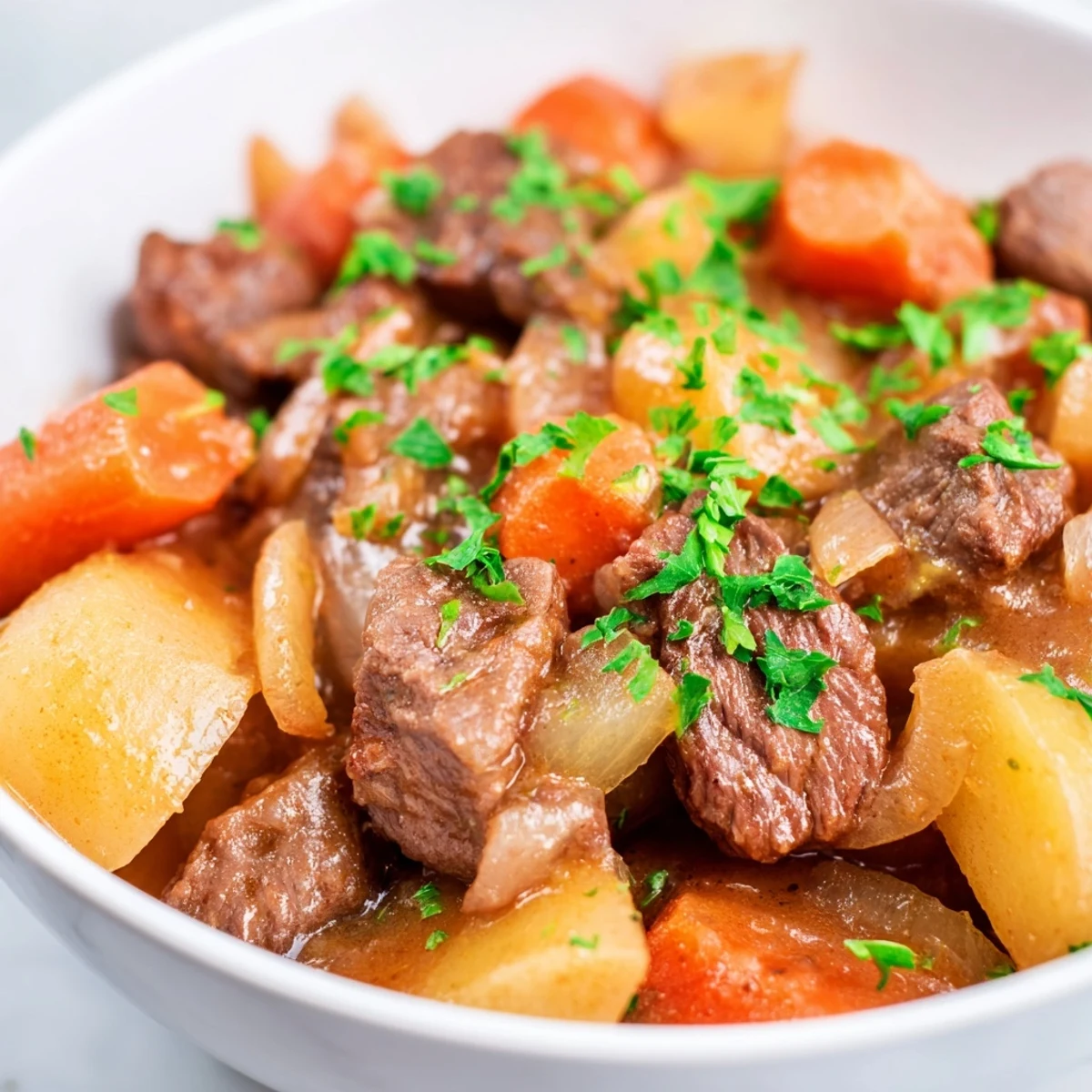
 This dish features tender chunks of beef simmered slowly with carrots, potatoes, celery, and aromatic herbs in a savory broth. The meat is optionally browned beforehand for extra flavor before combining with fresh vegetables and seasonings in a slow cooker. After hours of gentle heat, the stew thickens with a cornstarch mixture, creating a rich and comforting texture. Garnish with parsley and serve warm for a satisfying, gluten-free-friendly meal that pairs beautifully with crusty bread or mashed potatoes.
There's something about a slow cooker that turns a ordinary Wednesday into something worth slowing down for. Years ago, I'd come home to the smell of beef and thyme filling every corner of the kitchen, and I realized this wasn't just dinner—it was permission to sit down, to breathe, to let someone else do the heavy lifting while I handled the day. This stew became my answer to everything: cold nights, tired souls, people gathering around a table who needed reassurance that good food was still possible, even on the hardest days.
I made this for my neighbor when her mom was visiting from out of state, and she stood in my kitchen with tears in her eyes, asking what restaurant I'd ordered from. The comfort of it, the way the meat fell apart at the gentlest touch of a spoon—that's when I understood that slow-cooked food carries intention, and people can taste that kind of care.
Ingredients
- Beef chuck, 2 lbs, cut into 1.5-inch cubes: Chuck is forgiving and becomes impossibly tender during long cooking, unlike leaner cuts that dry out.
- Carrots, 4 medium, peeled and sliced: Slice them thick enough to hold their shape but thin enough to cook through in eight hours.
- Potatoes, 4 medium, peeled and diced: Cut them slightly smaller than the beef so they soften at the same pace.
- Celery, 2 stalks, sliced: Often overlooked, it builds the foundation of the broth's flavor.
- Onion, 1 large, chopped: The aromatics matter—don't skip this step or use a smaller onion.
- Garlic, 3 cloves, minced: Fresh is worth it; jarred garlic fades during the long cook.
- Beef broth, 4 cups: Quality broth makes the difference—taste it before you add it.
- Dry red wine, 1/2 cup (optional): It deepens the flavor, but extra broth works too.
- Tomato paste, 2 tbsp: A small amount adds richness without making it taste like tomato soup.
- Worcestershire sauce, 1 tbsp: This is the secret—it brings umami that makes people ask what the mysterious something is.
- Bay leaves, 2: Always remove them before serving; I once forgot and ruined the experience of a perfect spoonful.
- Dried thyme, 1 tsp: Fresh thyme is lovely, but dried holds up better to the long cook.
- Dried rosemary, 1 tsp: Use whole sprigs if you have them, or be gentle with powder so it doesn't taste dusty.
- Salt and black pepper: Start with 1 tsp salt and 1/2 tsp pepper, then taste at the end.
- Cornstarch, 2 tbsp, mixed with 3 tbsp cold water: This slurry thickens the broth without making it pasty.
- Fresh parsley, 2 tbsp, chopped: A small handful at the end reminds you that something green is good, even in comfort food.
Instructions
- Prepare the beef:
- Pat the beef dry—this is the one step that matters before browning. Moisture is the enemy of a good sear, so don't skip this.
- Sear the meat (optional but worth it):
- Heat a large skillet over medium-high heat and brown the beef in batches, giving each piece space to touch the pan. You'll hear it sizzle and smell something rich and meaty; that's the flavor foundation forming.
- Build the layers:
- Transfer the browned beef to your slow cooker, then add carrots, potatoes, celery, onion, and garlic. The vegetables will soften and release their sweetness into the broth.
- Make the braising liquid:
- In a bowl, whisk together beef broth, tomato paste, Worcestershire sauce, wine if using, thyme, and rosemary. Pour this over everything in the slow cooker and tuck in the bay leaves.
- Cook low and slow:
- Cover and cook on LOW for 8 hours, or on HIGH for 4 to 5 hours if you're in a rush. The slower option gives you more tender, forgiving results.
- Thicken the broth:
- Mix cornstarch and cold water into a smooth slurry, then stir it into the stew. Cover and cook on HIGH for 15 to 20 minutes until the broth becomes glossy and clings to the spoon.
- Finish and taste:
- Remove the bay leaves and take a moment to taste—adjust salt and pepper to your liking. Fresh parsley, scattered over the top, adds a bright note to balance the deep, rich flavors.
 Save to Pinterest
 I learned the bay leaf lesson the hard way at a dinner party, which I'd rather not detail. What I will say is that this stew, made correctly, becomes the kind of dish people ask you to make again and again.
Flavor Building: The Long Cook
The magic of slow-cooked stew isn't just tenderness—it's chemistry. As the beef cooks for hours, collagen breaks down into gelatin, which gives the broth a silky texture and deep, savory character that you simply can't rush. The vegetables soften but also intensify in flavor, and the aromatics—onion, garlic, thyme—dissolve into the broth until you can't quite identify them anymore, only feel their presence. This is why homemade stew tastes like love: it requires time, which is the one ingredient you can't buy.
Variations and Additions
This stew is a canvas. Mushrooms (sliced thick so they don't disappear) add an earthy note that pairs beautifully with the beef. Parsnips bring a sweet undertone that cuts through the richness. Some nights I add a tablespoon of balsamic vinegar at the very end, just enough to wake everything up without announcing itself. The tomato paste should never dominate—it's there to deepen, not declare.
Serving and Storage
Serve this in wide, shallow bowls with crusty bread for soaking up every last drop of broth, or ladle it over creamy mashed potatoes for a completely different meal experience. Leftovers actually improve after a day in the refrigerator, as the flavors continue to meld and settle. This stew also freezes beautifully for up to two months—I portion mine into individual containers so I can pull out comfort whenever I need it.
- Reheat gently on the stovetop over low heat, adding a splash of broth if it's thickened too much in the fridge.
- For a gluten-free version, verify that your broth and Worcestershire sauce are certified gluten-free before you begin.
- Fresh parsley stirred in just before serving keeps the stew tasting bright rather than heavy.
 Save to Pinterest
 This stew has fed me through seasons of change, and I hope it does the same for you. There's a reason slow-cooked food stays in people's memories long after the meal is gone.
Recipe Questions & Answers
- → Can I brown the beef before cooking?
-
Yes, browning the beef in a skillet adds depth of flavor but is optional.
- → What thickens the stew?
-
A mixture of cornstarch and cold water is stirred in near the end to thicken the broth.
- → Can I use gluten-free broth and Worcestershire sauce?
-
Absolutely, using gluten-free alternatives keeps the dish suitable for gluten-sensitive diets.
- → How long should I cook the stew on high heat?
-
Cooking on high typically takes 4 to 5 hours for tender beef and vegetables.
- → What are good serving suggestions for this dish?
-
Serve it alongside crusty bread or over creamy mashed potatoes for a complete meal.