 Save to Pinterest
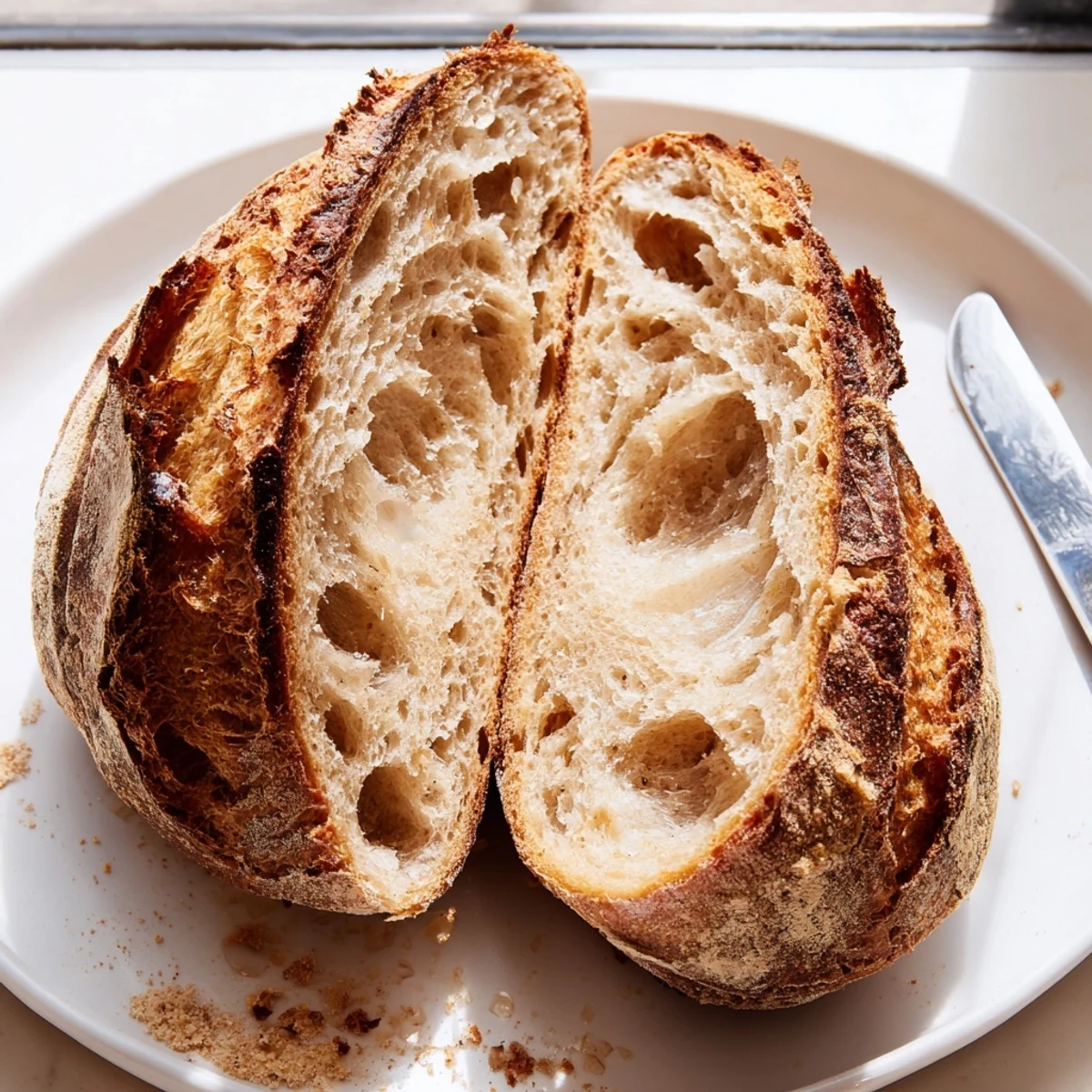
 Craft authentic crusty sourdough using wild yeast fermentation for that distinctive tangy flavor and chewy interior. This artisan method combines bread and whole wheat flours, creating a beautifully caramelized crust and airy crumb structure. The process involves folding during bulk fermentation, overnight proofing options, and high-heat baking in a Dutch oven for professional results. Perfect for novice and experienced bakers seeking traditional techniques.
There is something almost magical about transforming flour and water into a living, bubbling culture that becomes bread. My first sourdough journey started during a rainy weekend when I decided I was tired of store-bought bread that never seemed to satisfy. The smell of fermenting dough filling my kitchen became a comfort I looked forward to every week. Now I cannot imagine my home without that tangy, yeasty aroma.
I baked this sourdough for a dinner party where the main course completely flopped, but everyone could not stop talking about the bread. One friend actually asked if she could take home the remaining half loaf instead of dessert. That night taught me that sometimes the simplest foods made with care leave the most lasting impression on people.
Ingredients
- Active sourdough starter: Use a starter that has been fed within 8 hours and should be doubled in volume with bubbles throughout
- Bread flour: Higher protein content than all purpose gives the bread structure and chew
- Whole wheat flour: Adds flavor complexity and helps fermentation along
- Water: Room temperature prevents shocking the starter or slowing fermentation
- Sea salt: Enhances flavor and strengthens gluten structure
Instructions
- Prepare the dough:
- Mix bread flour, whole wheat flour, and water in a large bowl until just combined, cover and rest for 1 hour.
- Incorporate starter and salt:
- Add the bubbly starter and sea salt to the dough, mixing by hand until fully incorporated.
- Bulk fermentation:
- Cover and let ferment at room temperature for 4 to 5 hours, stretching and folding the dough every 30 to 45 minutes.
- Pre shape:
- Turn dough onto a lightly floured surface, shape gently into a round, cover and rest 20 minutes.
- Final shape:
- Shape dough into a tight round loaf and place seam side up in a well floured proofing basket.
- Proof:
- Cover and let rise 2 to 3 hours at room temperature or refrigerate overnight for more sour flavor.
- Preheat:
- Heat a Dutch oven or heavy pot with lid at 250°C (480°F) for at least 30 minutes.
- Score and bake:
- Invert dough onto parchment, score surface with a sharp blade, bake covered 20 minutes then uncovered 25 minutes at 220°C (430°F) until golden.
- Cool completely:
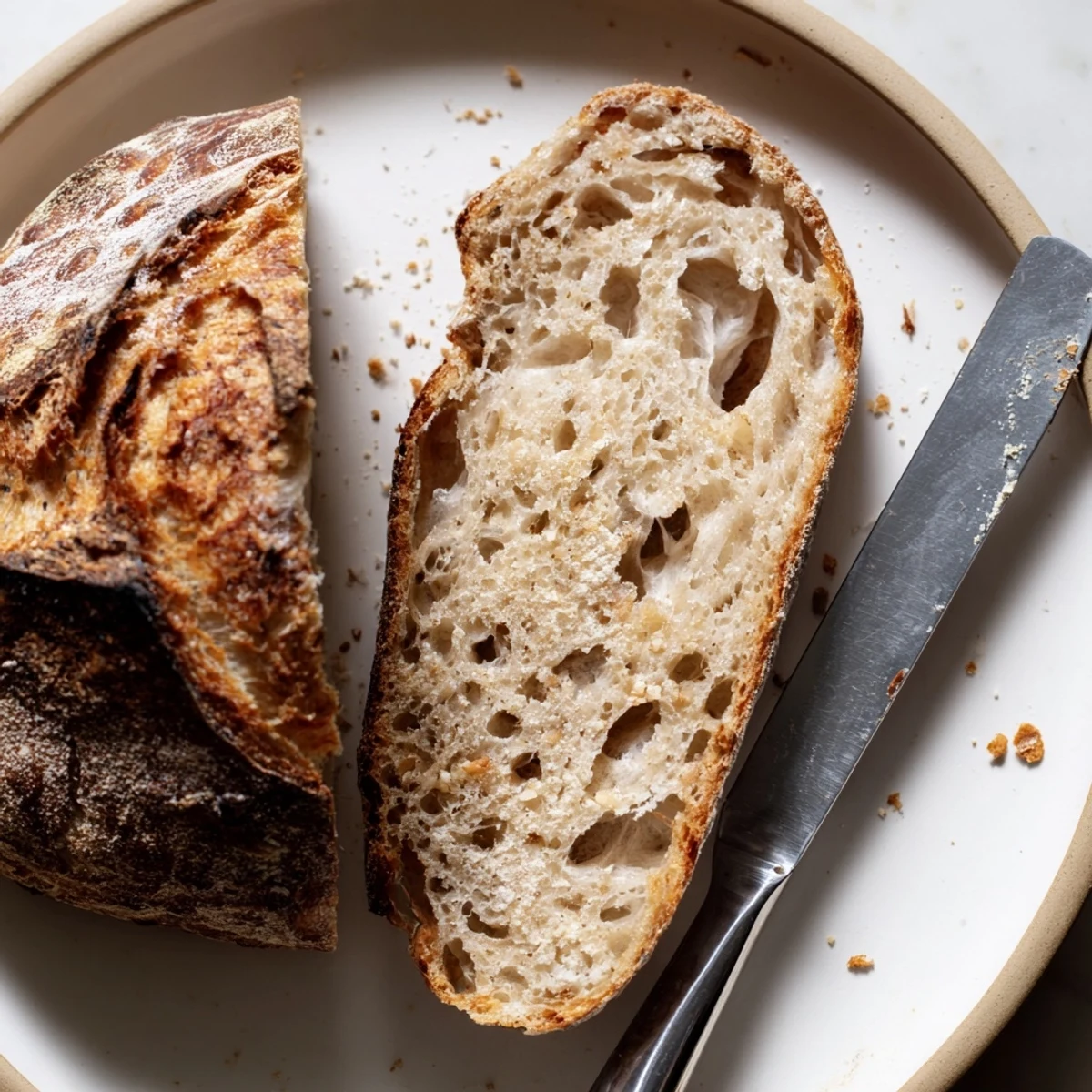
- Let bread cool on a wire rack for at least an hour before slicing to prevent gumminess.
 Save to Pinterest
 This bread became my go-to housewarming gift after I brought a loaf to my neighbor who had just moved in across the hall. She showed up at my door three days later asking for the recipe, and now we exchange sourdough starter whenever one of ours needs refreshing. Food really does build community in the most unexpected ways.
Understanding Your Starter
A healthy starter should smell pleasantly tangy with visible bubbles throughout. If it smells like alcohol or acetone, it needs feeding. I keep mine on the counter when baking weekly and in the refrigerator with weekly feedings when taking a break.
Shaping Confidence
The first few times I shaped sourdough, the dough spread flat and my loaves looked like pancake disasters. Learning to create surface tension by folding the dough tight against itself changed everything. Your hands will develop a feel for the right texture over time.
Scoring Like a Pro
A razor sharp blade or lame is essential for clean cuts that open beautifully during baking. Hold the blade at a 45 degree angle and score with confident swift motion rather than sawing back and forth. The pattern you choose affects where the bread expands in the oven.
- Use a spray bottle to mist the dough before scoring for easier cutting
- A simple cross score works just as well as intricate patterns
- Do not stress too much about perfect scores as the bread will taste delicious regardless
 Save to Pinterest
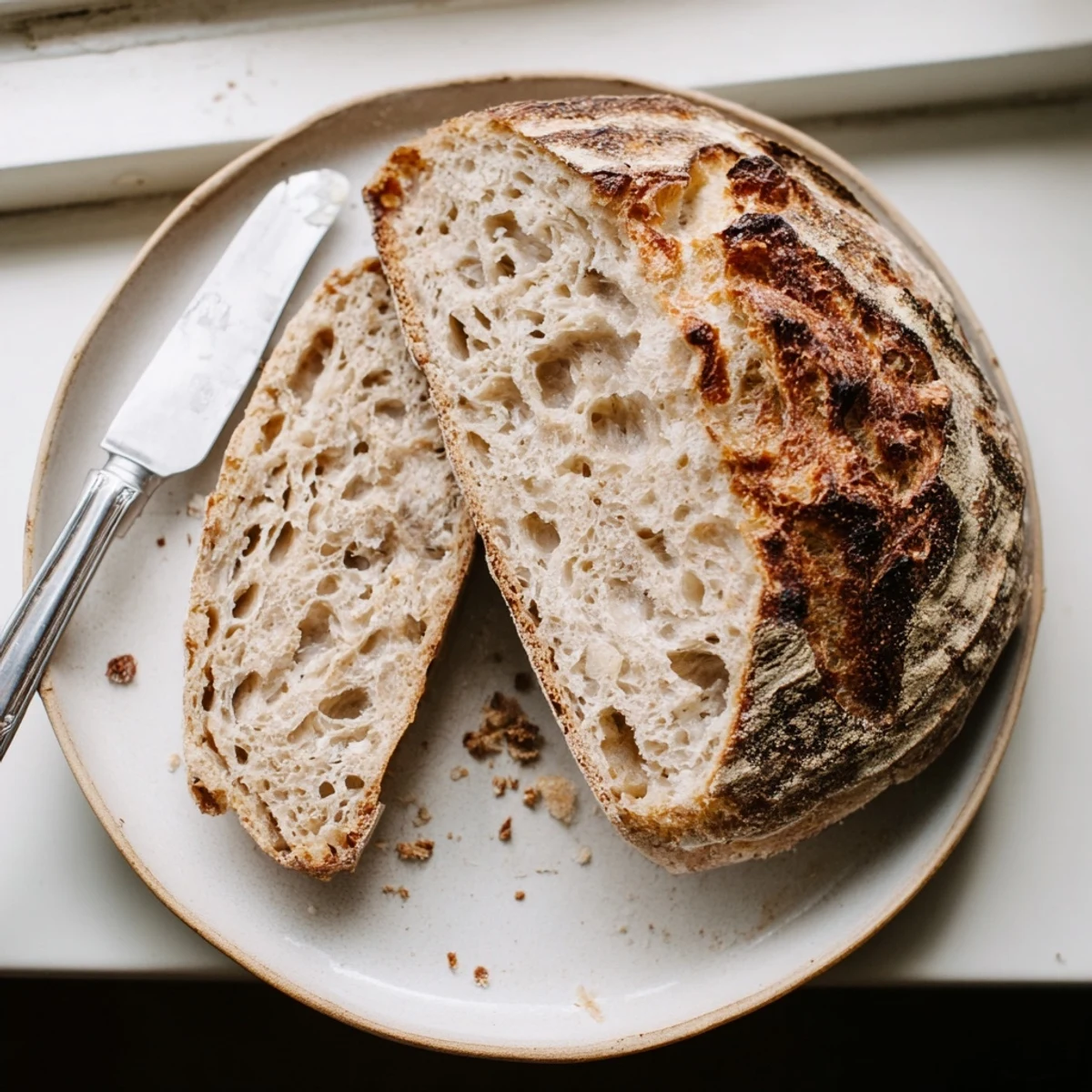
 There is nothing quite like cutting into a warm loaf of sourdough you created from nothing but flour, water and time. Share it with someone you love.
Recipe Questions & Answers
- → What makes sourdough different from regular bread?
-
Sourdough relies on wild yeast and beneficial bacteria instead of commercial yeast. This natural fermentation creates distinctive tangy flavors, improves digestibility, and develops a chewy texture with superior keeping qualities compared to standard loaves.
- → Why does sourdough take so long to make?
-
Wild yeast works more slowly than commercial yeast, requiring extended fermentation times. This slow process develops complex flavors, breaks down gluten for easier digestion, and creates the characteristic airy crumb structure and crispy crust.
- → Can I skip the overnight proofing?
-
Absolutely. Room temperature proofing for 2–3 hours works perfectly. However, cold proofing in the refrigerator overnight develops more pronounced sour flavors and makes handling easier due to the firmer dough.
- → Do I really need a Dutch oven?
-
A Dutch oven creates steam essential for crust development. If unavailable, use a heavy cast-iron pot with a tight-fitting lid or place a tray of ice cubes in the oven while baking to generate steam.
- → How do I know my starter is active enough?
-
An active starter doubles in size 4–8 hours after feeding, displays numerous bubbles throughout, has a pleasant tangy aroma, and floats when dropped in water. Feed it twice daily for 2–3 days before baking.