
 Save to Pinterest
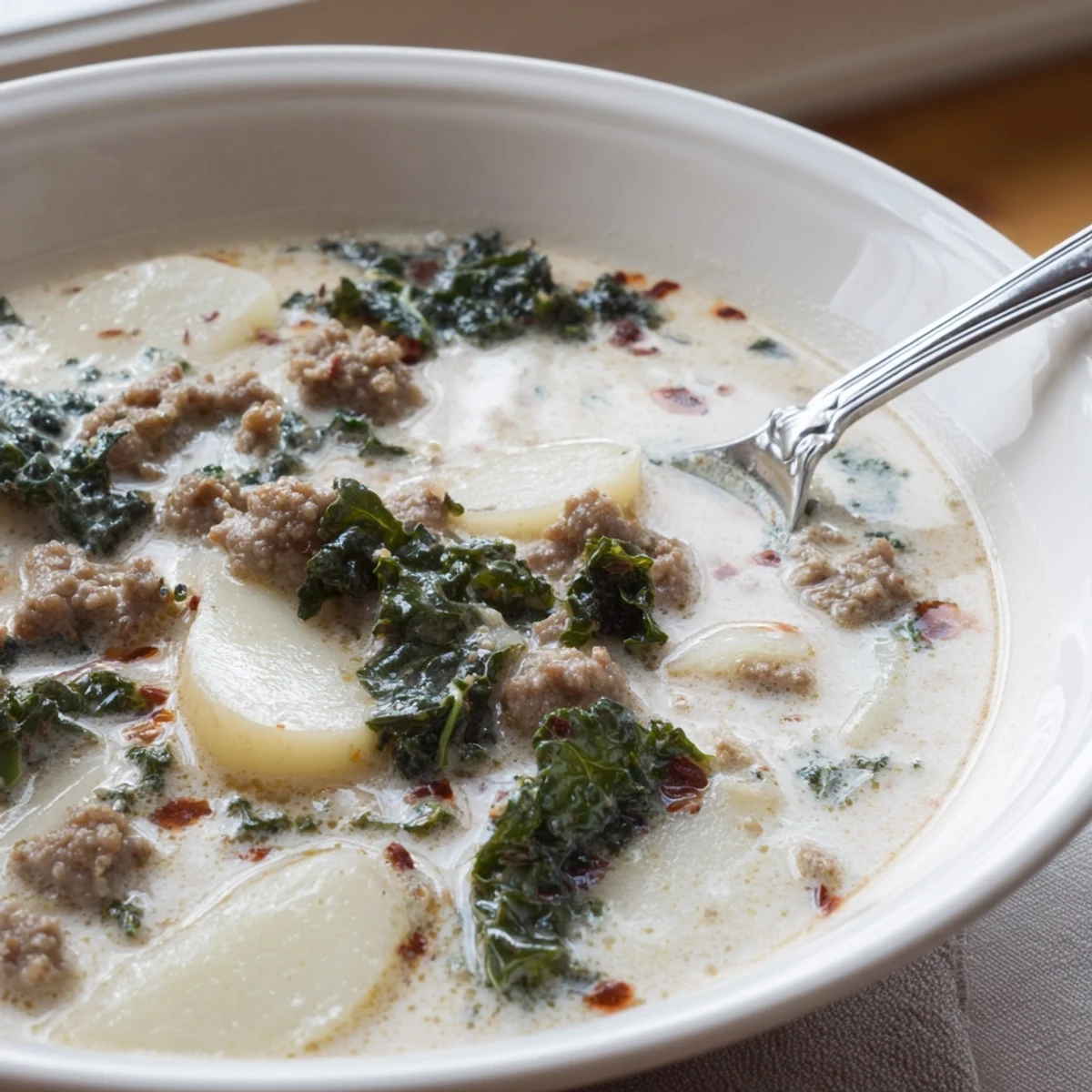
 This zuppa toscana brings together browned Italian sausage, thinly sliced russet potatoes, and wilted kale in a luscious cream-enriched chicken broth.
Ready in under an hour, it delivers bold Tuscan-inspired flavors with minimal effort—ideal for weeknight dinners or meal prep.
Serve it piping hot with crusty bread for a satisfying, soul-warming meal that feeds six generously.
The rain was hammering against the kitchen window so hard I could barely hear the pot bubbling on the stove, and honestly that was the moment I knew this soup had become a permanent fixture in my life. Something about the way sausage fat rendered into olive oil and filled every corner of the house with that deep savory warmth made the grey evening outside feel irrelevant. I ladled a bowl before it was even done simmering, burned my tongue, and went back for seconds anyway.
I made this for my sister the weekend she moved into her first apartment with a kitchen the size of a closet. She sat on a cardboard box eating bowl after bowl, insisting we name it housewarming stew, and now every October she texts me asking if it is soup weather yet.
Ingredients
- Italian sausage, 450 g, casings removed: The spicy version will give you a slow building heat that works beautifully with the cream, but mild keeps it kid friendly and lets you control the kick with red pepper flakes instead.
- Russet potatoes, 4 medium, thinly sliced: Slice them fairly thin, about a quarter inch, so they cook through evenly and some break down just enough to naturally thicken the broth without any extra effort.
- Yellow onion, 1 medium, finely chopped: Cook it slowly in the sausage fat until it turns golden and sweet because that one step is the flavor foundation everything else rides on.
- Garlic, 3 cloves, minced: Add it after the onion is already soft and only cook it for a minute, just until your kitchen smells like an Italian grandmother is visiting.
- Kale, 100 g, stems removed and chopped: Strip the leaves off those woody stems no matter how much of a rush you are in, because a stray stem in your soup is a textural surprise nobody enjoys.
- Low sodium chicken broth, 1 liter: Going low sodium lets you season the finished soup exactly to your taste rather than fighting whatever salt level the broth manufacturer decided on.
- Heavy cream, 250 ml: This is what turns a good sausage and potato soup into something that tastes like it came from a restaurant with cloth napkins and a wine list.
- Olive oil, 2 tablespoons: Just enough to get the sausage browning without sticking, and the fruity note it adds to the background is worth the small pour.
- Salt and black pepper, to taste: Season in layers as you go rather than dumping it all at the end and you will be amazed how much more balanced the soup tastes.
- Crushed red pepper flakes, optional pinch: Entirely up to your mood and your audience, but even a tiny shake adds a warmth that makes the cream taste richer by contrast.
Instructions
- Brown the sausage:
- Heat the olive oil in your largest soup pot over medium heat, drop in the sausage with the casings removed, and use the back of your spoon to break it into rough crumbles as it cooks for about six to eight minutes until you see golden brown edges forming everywhere. Spoon out any excess fat if the pan looks pooled, leaving just enough to coat the bottom for the next step.
- Soften the onion and garlic:
- Toss the chopped onion into the sausage and let it cook for about five minutes, stirring occasionally, until the pieces turn translucent and start catching little bits of color on their edges. Stir in the minced garlic and give it just one minute, stirring constantly, until the aroma hits you and you think yes this is exactly right.
- Simmer the potatoes:
- Add all the sliced potatoes to the pot and pour in the chicken broth, stirring gently to scrape up any browned bits from the bottom because that is concentrated flavor you do not want to leave behind. Bring everything to a boil then immediately drop the heat to a gentle simmer and let it cook uncovered for fifteen to twenty minutes until a fork slides through the potato slices with zero resistance.
- Wilt the kale:
- Pile in the chopped kale and stir it down into the hot liquid, watching it shrink from an impossible mountain into something much more manageable within about three to four minutes. You want it wilted and bright green, not cooked into oblivion, so keep an eye on it.
- Finish with cream and seasoning:
- Turn the heat to low before you add the cream, pouring it in slowly while stirring so it blends smoothly into the broth rather than separating or shocking the temperature. Season with salt, pepper, and red pepper flakes, then let the whole pot simmer gently for two to three more minutes just to bring everything together.
- Taste and serve:
- Ladle into wide bowls and taste one more time before serving because a final pinch of salt at this stage often makes the difference between a good soup and one people ask you to make again. Serve with whatever crusty bread you have for dunking and soaking up every last drop.
 Save to Pinterest
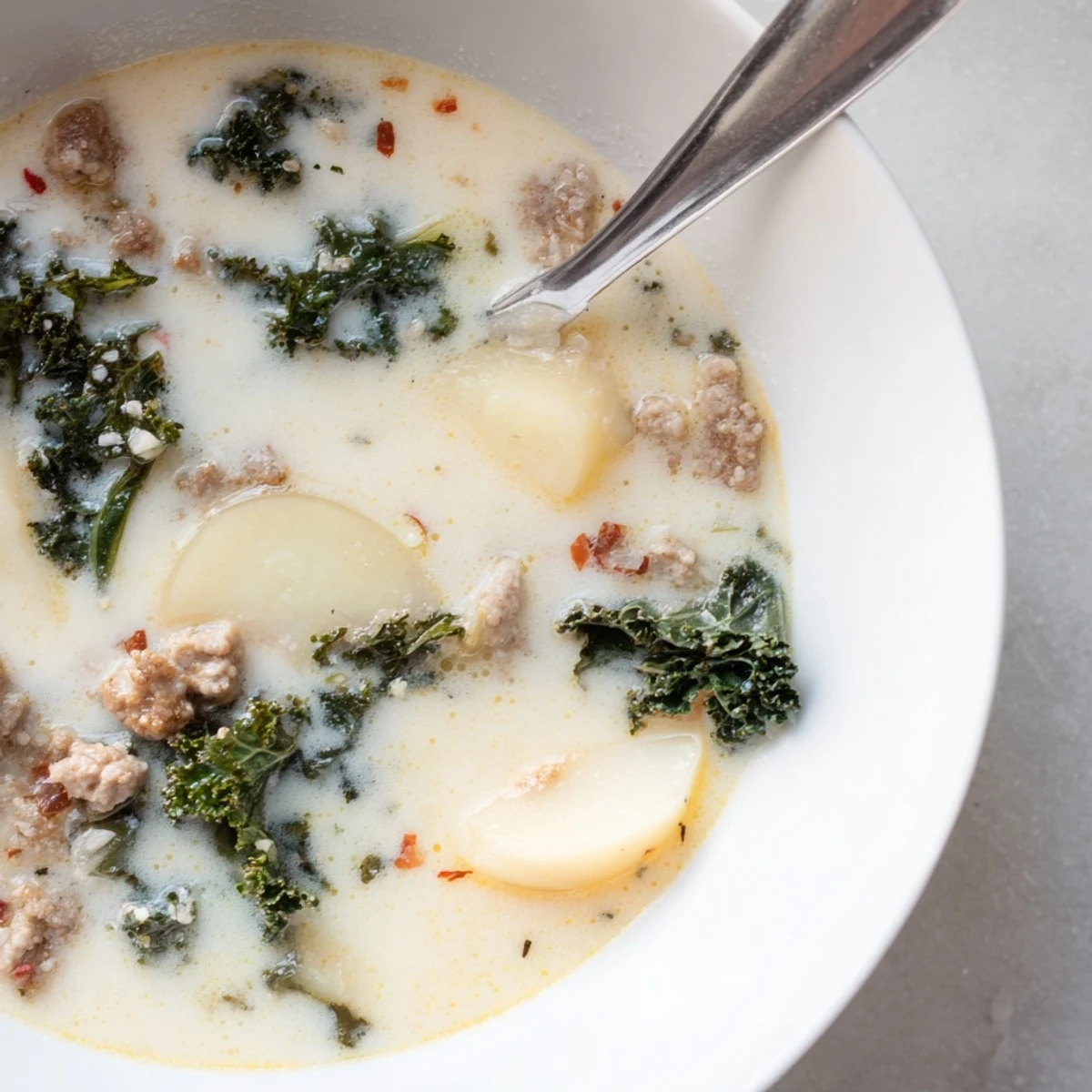
 There was a night last January when the power flickered twice during dinner and we ate this by candlelight, laughing about how the soup was the only thing keeping the house warm, and I realized food like this does more than fill you up.
Making It Lighter Without Losing the Soul
Half and half works in place of heavy cream if you want something a bit less indulgent, though you will lose some of that velvety body that makes each spoonful feel like a small luxury. Turkey or chicken sausage is a fine swap too, just brown it a little longer to develop the same depth of flavor since leaner meat has less fat to carry the taste on its own.
What to Serve Alongside
A loaf of sourdough or a baguette with good butter is really all you need, though a simple arugula salad with lemon vinaigrette cuts through the richness nicely if you are feeding people who like a full spread. A chilled Pinot Grigio or a light Italian lager alongside turns a weeknight dinner into something that feels planned without requiring any extra effort.
Storage and Reheating
This soup keeps beautifully for three to four days in an airtight container in the refrigerator, and the flavor genuinely improves after a night of rest. Reheat it gently on the stove over medium low heat rather than boiling it hard, stirring occasionally and adding a splash of chicken broth if it has thickened too much.
- Freeze individual portions for up to three months, though the cream may separate slightly upon thawing.
- A quick stir while reheating brings the texture right back where it should be.
- Label your containers with the date so nothing gets lost in the back of the freezer for a year.
 Save to Pinterest
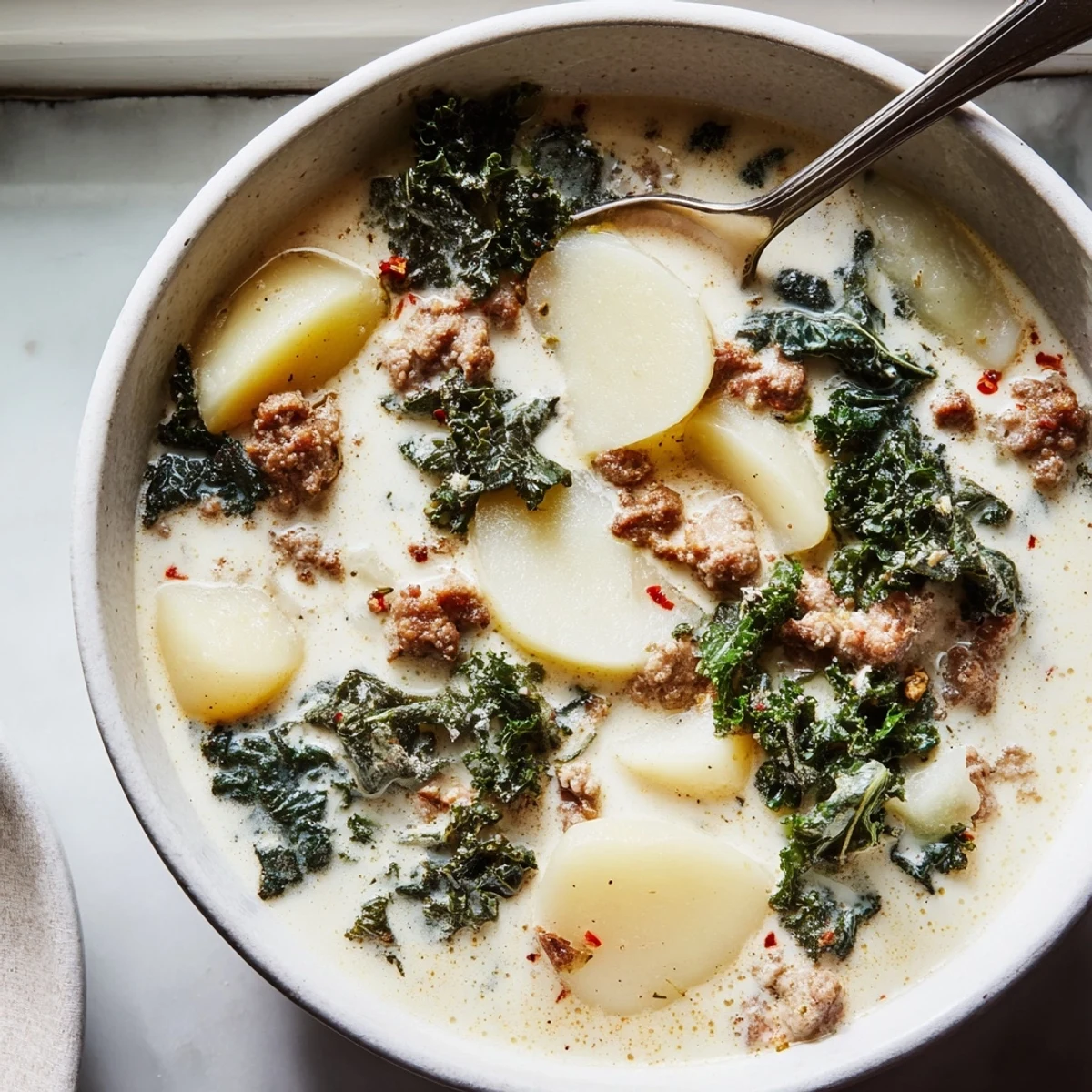
 Some recipes earn a permanent spot in your rotation not because they are fancy but because they show up reliably every cold evening and ask almost nothing of you except a pot and a little patience. This is that soup, and I hope it keeps someone at your table warm long after the bowls are empty.
Recipe Questions & Answers
- → Can I use a different type of sausage?
-
Yes. Turkey, chicken, or plant-based sausages all work well. Keep in mind that leaner options produce less fat, so you may want to add a splash more olive oil when sautéing the onions.
- → How do I store leftovers?
-
Let the soup cool completely, then transfer it to an airtight container. Refrigerate for up to 3 days. Reheat gently on the stovetop over low heat, stirring occasionally.
- → Can I freeze zuppa toscana?
-
Freezing is possible but the cream base may separate upon thawing. For best results, freeze the soup before adding the cream, then stir in the cream when reheating.
- → What can I substitute for heavy cream?
-
Half-and-half, evaporated milk, or a mixture of whole milk with a tablespoon of flour will lighten the dish while still providing a creamy texture.
- → Should I peel the potatoes?
-
Peeling is optional. Russet skins add a rustic feel and extra fiber. If you prefer a smoother broth, peel them before slicing.
- → What pairs well with this soup?
-
Crusty bread or garlic bread is classic. A side salad with vinaigrette cuts through the richness. For wine, a crisp Pinot Grigio complements the creamy broth beautifully.